European Era
is a modern intermediary company whose staff have wide experience in managing
and implementing internships.
We pride ourselves
on providing a quality service. One of our core competences is ensuring all
students get an internship that is of high quality and related to their
vocational field of study.
Job culture
varies from country to country so getting work experience in Spain will help
participants to acquire intercultural skills which will be extremely valuable
for future personal and professional development.
We will
research and choose the company that is best suited to each student’s previous
professional experience and level of English/Spanish language.
The
participant will carry out his/her internship in a company of a particular
sector that is part of the European Era database. This ensures that the company selected has
been checked and verified in terms of
the quality of services offered, the professionalism of the staff and of course
the volume and quality of work that companies are able to offer.
We organise
regular meetings and individual interviews with participants in order to
monitor properly the progress of the internship, and to resolve any problems
that may arise.
All
vocational areas can be catered for, including: Accounting, Administration,
Business Management, Marketing, Sales, Human Resources, Tourism/Hotels,
Cookery/Chefing, Design, Logistics, Engineering (mechanical, electrical,
process, etc.), Logistics, IT, Journalism, Agriculture, Childcare, Special
Education, Animal Care, Hairdressing, Beauty, Gym Instruction, Sports and
Leisure, Nursing, Healthcare, Carpentry, Construction, Fashion, Retail and much
more.
Following completion, all students obtain
mobility certificates recognising their internship.
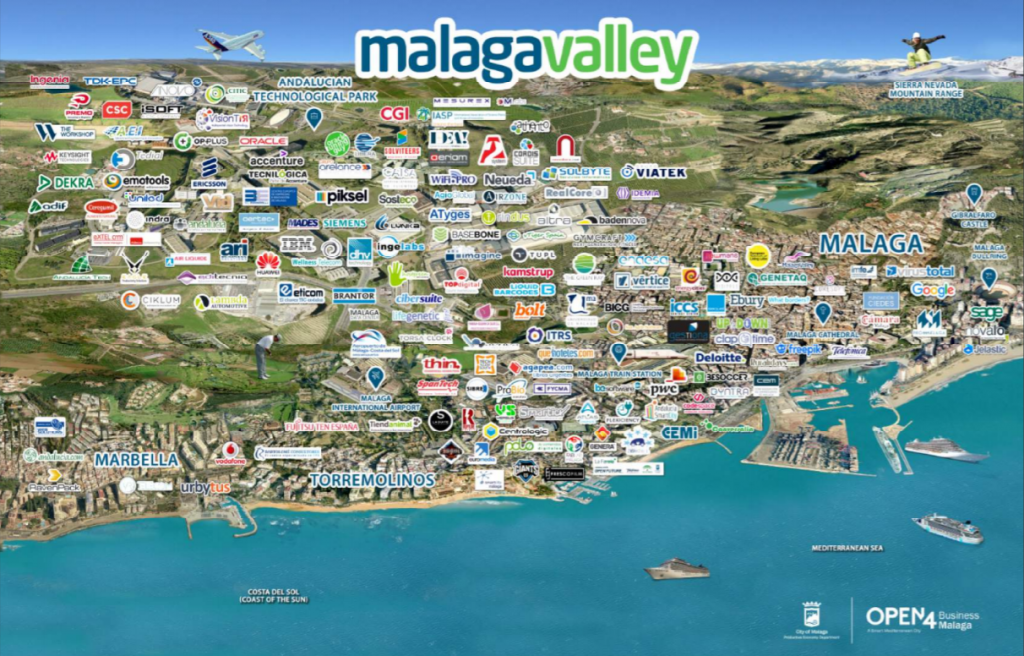
Malaga with a metropolitan population of 1.1 million (8 % foreign) is a dynamic Southern European hub. As the “Gateway to the Costa del Sol and to Andalucia.” It enjoys one of the best climates in Europe with beautiful beaches, attractive mountain landscapes, more than fifty golf courses, several sailing marinas and a ski resort in the nearby Sierra Nevada mountains. It is a dynamic city known for its culture (birthplace of Pablo Picasso and Antonio Banderas) and innovation. Accenture, Caterpillar, CGI, Computer Sciences Corporation (CSC), Ebury, Ericsson, Fujitsu Ten, Google, Huawei, IBM, ITRS, Keysight Technologies, Oracle, TDK-EPCOS, Verisk Analytics and other international companies have benefited from expanding their teams in Malaga during the last 10 years.
So why do so many people consider Malaga one of the best places to live, to work and to invest? Perhaps it is its strategic position on the Mediterranean coast or the low cost of living juxtaposed with a high quality of life, but perhaps it has more to do with the fact that Malaga is an entrepreneurial Smart City with a surrounding innovative ecosystem called Malaga Valley where rich historical heritage & technology meet to improve the quality of life for everyone. Malaga’s economic growth was 4.47 in 2018, 3.9 % in 2017, 3.7 % in 2016 and 3.9 % in 2015. 14 companies per day were created in 2018, as Malaga continues to lead regional growth and is ranked 4th nationally. 1,000 jobs were created last year in the technology sector as employment in the Andalusian Technological Park (PTA) grew more than 8%. The PTA is home to 646 companies and employs 19,873 workers.
The University of Malaga, with 36,000 students, the Samsung Tech Institute as well as nano-medicine & biotechnology centers concentrate knowledge and develop qualified people. Additionally, Malaga boasts 20 international schools, 13 ranked the best in Spain. Malaga’s state-of-the-art international airport has 2 runways, direct flights to 152 destinations in 31 different countries and receives more than 19 million passengers annually. Last year, 511,000 passengers arrived to Malaga on 299 cruise ships, while high-speed trains brought more than 3 million people to Malaga.
Malaga is the only Spanish city ranked in the top 10 of the Eurobarometer 2015 Quality of Life in European Cities survey. FDi magazine recognized Malaga in April 2016 as the 8th best European city for its strategy to attract foreign direct investment. There is a strong commitment to the digital economy, sustainable mobility, energy efficiency big data analytics and the application of new technologies. Using technology to more efficiently provide citizens with better services while preserving the environment has been a priority for the City of Malaga since 1996. Today, the City has more than 198 “Smart City” projects, programs and initiatives underway and boasts several internationally recognized pilot projects, such as:
SmartCity Malaga is a project that puts into practice the SmartGrid concept using the most advanced technologies for micro-generation, distribution and consumption of electricity that involves 11,000 homes and 1,200 businesses in the neighborhood of Misericordia Beach in Malaga.
Zero Emissions Mobility To All (ZEM2All) In 2011, Malaga was chosen by the Japanese government, Mitsubishi, Hitachi and Endesa to develop a pioneering international electrical mobility project with 200 electric cars and vehicle-to-grid charging stations around the city. The project tests rapid chargers and vehicle to grid charges in hopes of changing the urban mobility model and thus reducing pollution.
An Experimental Urban Laboratory for small and medium size businesses. We designated a municipal building with equipment and co-working space where companies can work side-by-side with the City’s engineers to test, to certify and to demonstrate new services and technologies within the Smart City concept.
An extensive network of business incubators and accelerators. Malaga boasts one of the largest European incubator networks, consisting of 14 facilities that have a total capacity for more than 300 startups. We also have Smart Cities Accelerators sponsored by Spain’s largest communications provider, Telefonica.
Last year, Malaga became home to the first Spanish National Digital Content hub. A Center for Excellence equipped with the latest technologies in 3D animation, virtual reality and graphic design. It has more than 6,000 m2 on 2 floors divided into recording studios, eSports video gaming stadiums, animation and graphic design centers, virtual reality experimentation rooms, 3D-printer laboratory, demonstration showrooms, training rooms, a Fablab, coworking spaces, business accelerators and offices.
Finally, attached are documents and below are links to media that you may find interesting:









 Español
  English (UK)